April compresses two tax calendars into one anxious month: Americans watch tax refund status 2026 while the UK turns a fresh fiscal page. The rhythm is similar on both sides of the Atlantic—file, wait, refresh the tracker—yet the rules, tools, and timelines differ enough that a clear plan saves days.
Quick summary: timelines, expectations, and the early signals
Most US e‑filed returns with direct deposit move in under three weeks once the IRS accepts the return. Paper returns and paper checks slow that window. Refunds claiming certain anti‑fraud‑protected credits are not released until at least mid‑February by law, which sets the tone for the entire season. In the UK, once HMRC approves a repayment and you choose bank transfer, many repayments land within several working days; cheques take longer and postal timing adds uncertainty. April is both high‑volume and high‑scrutiny, so identity checks, offsets against debts, and data mismatches become the main reasons refunds pause.
Plan for a two‑speed season. The first speed: clean, electronically filed returns with direct deposit that pass automated checks and move quickly. The second speed: any return with mismatched data, identity verification needs, amended entries, or special credits that trigger manual reviews. Your job is to keep your return in the first lane and track precisely when it hops to the second.
How refunds move: IRS and HMRC, from submission to payout
In the US, the IRS pipeline has distinct waypoints. After e‑file acceptance, the return hits automated checks that compare what you reported with what employers, banks, and marketplaces reported. The IRS status tool typically shows three stages: return received, refund approved, and refund sent. Direct deposit pushes funds to your bank; paper checks rely on mail delivery and can be reissued if misrouted or stale. Amended returns and injured spouse claims follow separate, slower lanes.
In the UK, HMRC processes depend on how the overpayment arose—Self Assessment, PAYE through your employer, P800 reconciliation, or a claim you initiated. Your Personal Tax Account surfaces messages when HMRC needs more information, flags identity checks, and indicates when a repayment is issued. Bank transfer is the swiftest path once issued; cheques introduce posting and clearing time.
Across both systems, three factors dominate speed: filing method (e‑file or paper), payout method (direct deposit or cheque), and whether automated checks reconcile your data without human intervention.
How to check your IRS refund status (Where’s My Refund and IRS2Go)
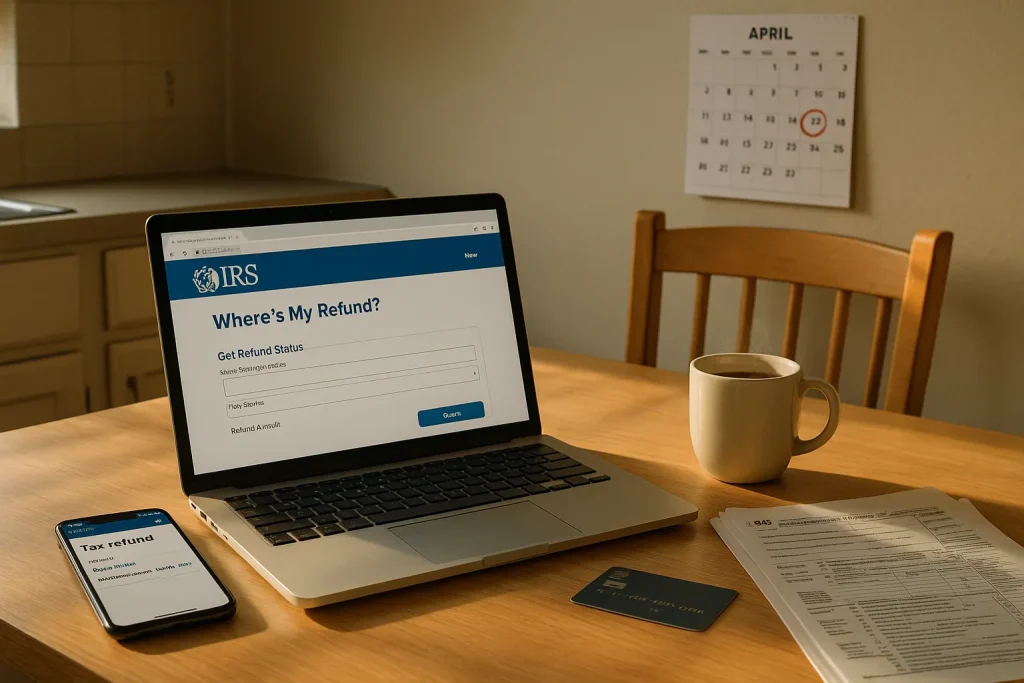
The IRS provides two official touchpoints: the web tool Where’s My Refund and the IRS2Go mobile app. You’ll need your Social Security number or ITIN, filing status, and the exact refund amount on your return. For e‑filers, status usually appears within around 24 hours of acceptance; for paper returns, allow several weeks before status appears. Updates generally occur once per day.
If the tool shows refund approved with a deposit date, your bank’s posting schedule—not the IRS—determines the hour funds appear. If the tool shows still processing, it means the return is in verification or review. The IRS rarely provides additional detail during active checks, and phone agents see the same high‑level indicators unless the system prompts outreach.
Offsets reduce or redirect a refund to pay certain federal or state debts. If an offset applies, the status message can indicate an adjustment, and a notice follows with details. For shared bank accounts, ensure the account can receive a deposit under your name to avoid returns and re‑issuance cycles.
Use the phrase you’ll see in many search boxes—wheres my refund IRS tracker—only to land on IRS.gov. Third‑party look‑alikes can be misleading. For clarity and speed, check your IRS refund status 2026 once daily and avoid repeated resubmissions that don’t accelerate processing.
How to check your HMRC refund status (Personal Tax Account and messages)
HMRC doesn’t provide a single all‑purpose public tracker like the IRS tool. Instead, your Personal Tax Account is the command center. Sign in to view Self Assessment repayment messages, PAYE tax code adjustments, P800 summaries, and any identity checks. If you claimed a refund online and selected bank transfer, look for a confirmation that the repayment has been issued; bank posting often follows within a few working days. Cheque repayments arrive by post and depend on address accuracy and postal timelines.
For PAYE employees, a year‑end P800 or a reconciliation can generate a repayment automatically. For Self Assessment, repayments can be requested once liabilities are fully settled and HMRC has processed your return. If HMRC needs more information, the message center will show requests; swift responses shorten delays.
Delays to avoid and fast‑track habits that work
- E‑file and choose direct deposit. This is the single biggest accelerator on both sides of the Atlantic compared with paper filing and cheques.
- Match names, addresses, and identifiers exactly. Ensure SSN/ITIN (US) or NI number (UK) matches official records; use the name on legal documents and bank accounts.
- Report income forms precisely. In the US, W‑2s, 1099s, and marketplace health forms must match what payers filed. In the UK, employment income and benefits should reconcile with PAYE records.
- Enter the exact refund amount in trackers. A mismatched figure can block access to IRS status tools and can confuse your own monitoring.
- Expect protective holds on certain credits. In the US, refunds that include specific refundable credits face statutory release dates that cannot be accelerated.
- Clean bank details. Double‑check sort code/account number (UK) or routing/account number (US). Returned deposits add days or weeks.
- Respond to identity checks quickly. When the IRS or HMRC asks you to verify identity or income, act the same day and keep confirmation receipts.
- Avoid amended changes unless necessary. Amended returns or repayment corrections move through slower lanes; if you must amend, expect a longer arc.
If your refund stalls or goes missing: clear next moves
Start with your tracker status and your original filing acknowledgement. In the US, only call the IRS if the status tool instructs you to or if a typical processing window has passed after e‑file acceptance. When a status indicates a mailed cheque that never arrived, the IRS provides a process to trace and reissue. For potential offsets, verify through official channels before disputing amounts. Keep every notice; the exact notice number matters when you speak to an agent.
In the UK, check your Personal Tax Account messages for identity checks and repayment confirmations. If you changed banks or addresses around the time of issuance, monitor both your old and new channels; a returned payment is often reissued once bank details are corrected. For cheques, allow postal time before requesting a reissue. If HMRC asks for documents or additional verification, submit exactly what is requested and retain submission references.
Cash‑flow gaps are real while you wait. A short‑term earnings bridge lowers stress without expensive borrowing. If you need structured ideas, consider practical, time‑bound options like ways to make $1,000 this month from side hustles; a targeted plan beats random gigs when the clock is ticking.
Real‑time tools, trusted links, and 2026 alerts in one place
Use official sources and check them once daily for movement or news:
United States:
– IRS Where’s My Refund: https://www.irs.gov/refunds
– IRS2Go app information: https://www.irs.gov/newsroom/irs2goapp
– IRS refund FAQs and potential delays overview: https://www.irs.gov/refunds/tax-season-refund-frequently-asked-questions
– Treasury Offset Program information: https://fiscal.treasury.gov/top/
– Missing or lost refund guidance: https://www.irs.gov/refunds/what-to-do-if-youre-missing-your-tax-refund
– IRS news releases for current‑season updates: https://www.irs.gov/newsroom
United Kingdom:
– Sign in to your Personal Tax Account: https://www.gov.uk/sign-in-personal-tax-account
– Claim or check Income Tax refunds guidance: https://www.gov.uk/claim-tax-refund
– Check your Income Tax (PAYE) account: https://www.gov.uk/check-income-tax-current-year
– HMRC service availability and known issues: https://www.gov.uk/government/publications/hmrc-service-availability-and-issues
For 2026 policy shifts, filing deadlines, or backlog notices, rely on the IRS newsroom and GOV.UK/HMRC service pages above. When volumes spike, both agencies may adjust processing notes or contact guidance; those pages post changes first.
Preparation for the next filing window starts now. Keep a tidy digital folder of W‑2s/1099s (US) or P60s/P45s and benefits letters (UK), and reconcile banking details before filing. In the US, adjust paycheck withholding if you routinely overpay or owe at filing using the IRS Tax Withholding Estimator: https://www.irs.gov/individuals/tax-withholding-estimator. In the UK, review your PAYE tax code in your Personal Tax Account and correct errors early; fewer surprises mean faster repayments.
FAQ: quick answers
When will I get my 2026 tax refund from the IRS?
Many e‑filed returns with direct deposit are issued in under three weeks after IRS acceptance. Paper returns and paper checks extend the timeline, and certain credits are held until at least mid‑February. Track your tax refund status 2026 daily for the clearest signal.
How do I check my IRS refund status online?
Use the IRS Where’s My Refund web tool or the IRS2Go app with your SSN/ITIN, filing status, and exact refund amount. Status usually appears within about a day of e‑file acceptance and updates once daily.
How long does HMRC take to issue refunds?
After HMRC approves a repayment, bank transfers often arrive within a few working days; cheques take longer. Timing varies by case type (PAYE, Self Assessment, P800) and whether any identity or data checks are required.
What common mistakes cause refund delays?
Data mismatches on names or identifiers, incorrect bank details, unreported or mis‑entered income forms, and not responding to identity checks. In the US, returns with certain refundable credits are legally held until mid‑February, which adds time to early‑season refunds.