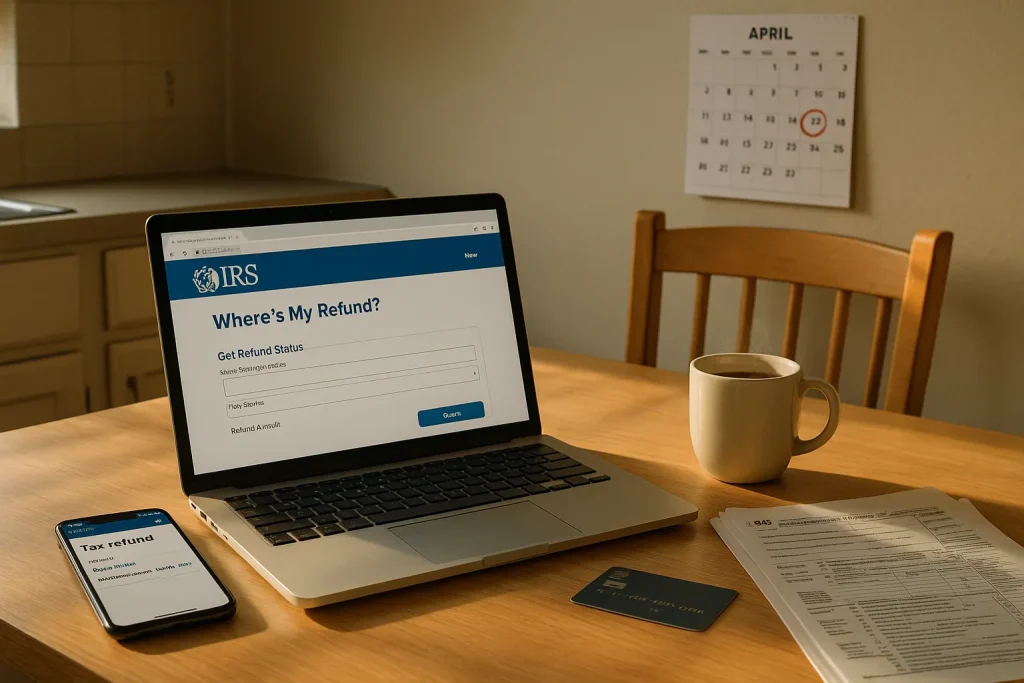
The calendar has turned past mid-April, your return was filed weeks ago, and the IRS “Where’s My Refund” tool still reads the same maddening status: Your return is being processed. You are not imagining things. The IRS refund delay April 2026 is real, it is widespread, and the reasons behind it are more layered than the agency wants to publicly acknowledge. Across online forums, tax-preparation offices, and congressional phone lines, a single question dominates: why is my tax refund still processing? The answer, it turns out, has less to do with your return and more to do with a system in the middle of a quiet, painful metamorphosis.
Every spring brings its share of refund anxiety. But 2026 is different. A convergence of budget reallocations, new fraud-prevention protocols, staffing gaps, and technological overhauls has created a bottleneck unlike anything taxpayers have experienced since the pandemic-era backlogs. If your refund is stuck, understanding the architecture of the delay is the first step toward reclaiming your money — and your sanity.
Why IRS Refunds Are Taking Longer Than Usual in 2026
To understand the current landscape, you need to look beyond the surface. The IRS entered the 2026 filing season carrying forward structural challenges that most taxpayers never see. Congress approved a series of budget shifts in late 2025 that redirected enforcement funding away from taxpayer services. The result: fewer agents processing returns, longer queues for manual review, and an IT infrastructure that is simultaneously being modernized and strained.
The IRS refund schedule 2026 was originally projected to mirror historical norms — 21 days for e-filed returns, six to eight weeks for paper. In practice, IRS processing times in April have stretched well beyond those benchmarks. Internal memos obtained by government watchdog groups suggest that the average electronic return requiring any level of manual review is now sitting in queue for 35 to 45 days. Paper returns? Closer to 12 weeks.
This is not a glitch. It is the predictable outcome of asking a century-old bureaucracy to do more with less while simultaneously rebuilding its own foundations. The IRS is caught between the political demand for modernization and the fiscal reality of reduced operational budgets. Taxpayers are the ones absorbing the cost — measured not in dollars taxed but in dollars delayed.
Top 5 Hidden Reasons Your Tax Refund Is Stuck
The official IRS communications tend toward the vague: “processing delays,” “additional review needed,” “allow more time.” But behind those euphemisms are specific, identifiable causes. Here are the five most common reasons your tax refund delayed 2026 is still showing as pending:
- 1. Automated Fraud Filters Have Gotten Aggressively Broad. The IRS expanded its fraud-detection algorithms for the 2026 season, casting a wider net to catch identity theft and fabricated returns. The unintended consequence: legitimate returns are being flagged at higher rates. If your income changed significantly, if you claimed new credits, or if your filing information doesn’t perfectly match W-2 data already in the system, your return may be sitting in a secondary review pile.
- 2. Mismatched Third-Party Data. Employers and financial institutions submit W-2s, 1099s, and other information returns to the IRS on their own timelines. When your filed return arrives before the corresponding employer data, the system holds it for cross-referencing. Late submissions from employers — a growing problem in 2026 — mean your refund waits.
- 3. Earned Income Tax Credit and Child Tax Credit Holds. By law, the IRS cannot issue refunds claiming the EITC or Additional Child Tax Credit before mid-February. But in 2026, the downstream processing of these returns has been slower than usual, pushing many EITC/CTC refunds deep into April and beyond.
- 4. Amended Return Backlog Spillover. The amended return refund delay problem from prior years has not been fully resolved. The IRS still carries a backlog of amended returns from 2024 and 2025. Agents assigned to clear that backlog are the same agents who would otherwise be processing current-year returns. The bottleneck is human, not digital.
- 5. The New Identity Verification Queue. This is the big one for 2026 — and it deserves its own section.
How the New IRS Identity Verification Process Affects Your Refund
In January 2026, the IRS quietly expanded its identity verification requirements under what it internally calls the “Enhanced Taxpayer Authentication Initiative.” The program, developed in partnership with third-party verification vendors, requires a growing subset of taxpayers to confirm their identity before their refund is released. If you’ve been selected, you may have received a letter — or you may not have, depending on when the flag was triggered.
The IRS refund hold identity verification process works like this: your return enters the system, passes initial processing, and then gets routed to an authentication queue. You may be asked to verify your identity through ID.me, the IRS’s online portal, or — in some cases — by calling a dedicated verification line. The problem is that IRS customer service wait time for the verification line has ballooned to an average of 90 minutes, with many callers reporting being disconnected after extended holds.
The verification itself is not unreasonable. Identity theft in tax filing remains a billion-dollar problem, and the IRS has a legitimate interest in ensuring refunds go to the right people. But the execution in 2026 has been clumsy. Taxpayers are not always notified promptly. The online verification system experiences intermittent outages. And the lack of clear communication has left millions wondering whether their refund is delayed for a fixable reason or lost in a bureaucratic void.
If you suspect your return has been flagged for identity verification, check your IRS online account at irs.gov. Look for any action items or notices. If you see a verification request, complete it immediately — every day of delay on your end adds days on theirs.
Step-by-Step: What to Do If Your Refund Is Still Pending
Waiting is psychologically corrosive, especially when money you’ve already earned is being held by an institution that won’t explain why. Here is a concrete action plan if your IRS refund status 2026 still shows as pending or processing:
Step 1: Check “Where’s My Refund” — But Understand Its Limits. The IRS’s Where’s My Refund 2026 tool (available at irs.gov/refunds) updates once every 24 hours. It will show one of three statuses: Return Received, Refund Approved, or Refund Sent. If you’ve been stuck on “Return Received” for more than 21 days after e-filing, something is likely holding your return in review. The tool will not tell you what.
Step 2: Log Into Your IRS Online Account. Your IRS account provides more granular information than the refund tool. Look for notices, letters, or requests for additional information. This is where identity verification prompts typically appear.
Step 3: Verify Your Filing Information. Pull up your filed return and compare it against your W-2s, 1099s, and other documents. Even small discrepancies — a transposed digit in a Social Security number, a rounding error in reported income — can trigger a hold. If you find an error, you may need to file an amended return, though be aware of the amended return refund delay that currently averages 16 to 20 weeks.
Step 4: Call the IRS — Strategically. If it has been more than 21 days since e-filing (or six weeks since mailing a paper return), you are within your rights to call the IRS at 1-800-829-1040. Call early — lines open at 7 a.m. local time — and be prepared for a long wait. Tuesday and Wednesday mornings tend to have slightly shorter hold times. Ask the agent specifically whether your return is in “Error Resolution” or “Identity Verification” status.
Step 5: Contact the Taxpayer Advocate Service. If your refund delay is causing genuine financial hardship — inability to pay rent, medical bills, or other essentials — you can request assistance from the Taxpayer Advocate Service (TAS). This is an independent organization within the IRS that can sometimes expedite processing. File Form 911 to initiate a case.
When You Should Actually Worry and Contact the IRS
Not every delay is cause for alarm. The IRS processes over 160 million individual returns each year, and the vast majority of refunds — even delayed ones — eventually arrive. But there are specific signals that suggest your situation requires active intervention:
- Your tax refund not received yet after 45 days from e-filing with no correspondence from the IRS.
- The “Where’s My Refund” tool shows no status at all, or displays an error message.
- You received a notice requesting information and responded, but your refund status hasn’t changed in 30 days.
- Your tax transcript (available through your IRS online account) shows a Transaction Code 570, which indicates a hold on your account.
Transaction Code 570 is particularly important. It means the IRS has placed a freeze on your refund, often for review. It is usually followed by Transaction Code 571 (hold released) and then 846 (refund issued). If you see 570 without a subsequent 571 for more than four weeks, escalation is warranted.
The tax refund pending meaning in 2026 is essentially this: your money is in a queue, and the queue is longer than it should be. It does not mean your return was rejected. It does not mean you are being audited. In most cases, it means the system is overwhelmed and your return is waiting its turn.
Staying Informed When the IRS Won’t Keep You Updated
One of the most frustrating aspects of the IRS refund delay April 2026 situation is the information vacuum. The IRS does not proactively notify taxpayers about processing delays unless specific action is required. This leaves millions refreshing the same status page daily, searching for answers the agency isn’t providing.
This is where independent tracking and analysis become essential. Platforms like USWatchers have become go-to resources for taxpayers seeking real-time analysis of IRS processing trends, policy changes, and filing-season developments. Rather than relying solely on official IRS communications — which tend to be delayed and deliberately vague — informed taxpayers are turning to independent sources that aggregate data, interpret policy shifts, and provide actionable guidance. In a season defined by uncertainty, having a reliable external perspective is not a luxury; it is a necessity.
The Bigger Picture: What the 2026 Delays Tell Us About the IRS
Zoom out from your individual refund for a moment and consider what the 2026 filing season reveals about the state of American tax administration. The IRS is an agency in transition — caught between legacy systems built in the 1960s and a mandate to modernize that has been funded, defunded, and refunded across multiple congressional sessions. The how long IRS refund take 2026 question is not just a personal finance question. It is a governance question.
The delays are not random. They are the visible symptom of decades of underinvestment colliding with escalating demands. More complex tax codes, more credits and deductions, more fraud, more returns — and fewer resources to handle all of it. Until the structural funding of the IRS stabilizes, filing seasons like 2026 will remain the norm rather than the exception.
For now, the best any individual taxpayer can do is file accurately, respond promptly to any IRS requests, monitor their account proactively, and resist the urge to file duplicate returns (which only creates more delay). Your refund is coming. The system is slow, not broken — though the line between the two grows thinner every year.
FAQ: IRS Refund Delays in April 2026
Why is my 2026 tax refund taking so long?
The most common reasons for delayed refunds in 2026 include expanded fraud-detection filters, the new identity verification process, mismatched employer data, EITC/CTC processing holds, and reduced IRS staffing levels. If your return requires any manual review, processing times have extended to 35–45 days for e-filed returns and up to 12 weeks for paper returns. Check your IRS online account for any pending action items or notices.
How do I check my IRS refund status in April 2026?
Use the IRS “Where’s My Refund” tool at irs.gov/refunds, which updates once daily. For more detailed information, log into your IRS online account where you can view tax transcripts and any pending notices. Look specifically for Transaction Codes 570 (hold) and 846 (refund issued) on your account transcript for the most accurate status.
Can identity verification delay my IRS refund?
Yes. The IRS expanded its Enhanced Taxpayer Authentication Initiative in 2026, and a growing number of returns are being routed to identity verification before refunds are released. You may be asked to verify through ID.me, the IRS online portal, or by phone. The verification phone line currently averages 90-minute wait times. Complete any verification request immediately to minimize additional delays.
How long does the IRS take to process a refund in 2026?
The official IRS estimate remains 21 days for e-filed returns and six to eight weeks for paper returns. However, actual processing times in April 2026 are running significantly longer. E-filed returns requiring any review are averaging 35–45 days. Amended returns are taking 16–20 weeks. Returns flagged for identity verification can add an additional two to four weeks depending on how quickly the taxpayer responds.